Table of Contents
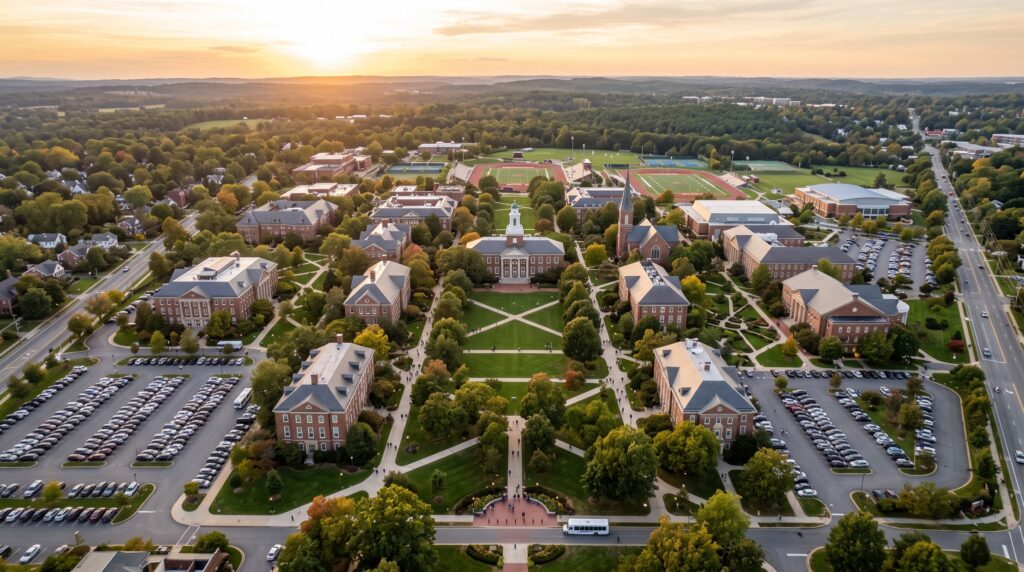
Campus parking problems are not new, but they are getting harder to ignore. Permit waitlists stretch into the hundreds. Surface lots get replaced by buildings. Construction costs for structured parking have climbed to the point where adding a hundred stalls is a multi-million dollar decision that takes years to approve.
The instinct is to treat campus parking solutions as a supply problem. Build more. Expand the lot. Add a parkade. But the real issue is demand: a large portion of the people arriving on campus every day are doing it in single-occupancy vehicles when a carpool option could serve them just as well and free a stall in the process.
This post covers the university parking problems driving that demand, what university parking management actually has available as levers, and why a carpool program built for the campus environment outperforms most of the alternatives.
Why Campus Parking Problems Keep Getting Worse
Universities run into a structural mismatch. Enrollment grows, faculty and staff headcount grows, and the number of vehicles arriving on campus grows with it. The number of stalls does not grow at the same pace because land is finite, expensive, and increasingly competing with academic buildings, green space, and student housing.
The demand side is also unusual compared to a standard commuter workplace. A student commuter might arrive at 8am for a lecture, leave by noon, and not come back until 3pm. Another arrives at 1pm and stays until 9pm. Faculty schedules vary by teaching load. Administrative staff work closer to 9-to-5 patterns. All of these groups are sharing the same lot with no coordination.
Peak demand hits hardest at semester start and around midterms and exams, exactly when stress is already high. The result is circling, congestion on surrounding streets, and a permit system that feels unfair because demand is visible daily and relief is invisible.
The Real Cost of University Parking Problems
Structured parking on a campus site currently runs $35,000 to $50,000 per stall in most urban and suburban university contexts, once you factor in construction, compliance, and long-term maintenance. A 300-stall parkade is a $10 to $15 million capital decision that often competes with academic priorities for the same budget.
Surface lots are cheaper to build but carry a different cost: every acre of asphalt is an acre that is not green space, not student housing, and not academic or research use. University communities, particularly students, are increasingly vocal about that trade-off.
The student commuter carries a direct financial burden too. Annual permit prices at large Canadian universities range from $600 to over $2,000 depending on lot tier and institution. For a student on a tight budget, parking is one of the more significant and frustrating line items in their cost of attendance.
University Parking Management Options and Their Limits
Most university transportation departments are working with a short list of demand management tools. Each one helps. None of them solves the problem on its own.
Tiered permit pricing. Charging more for close lots and less for remote ones redistributes demand across the campus rather than reducing it. Staff and students self-select by how much the walk matters to them. Works well for campuses with meaningful lot distances but does not reduce total vehicle arrivals.
Transit subsidies. Discounted or free transit passes help the segment of commuters who live near a reliable bus or rail line. That is often a minority on campuses that draw from a wide geographic catchment, including suburban and rural areas where transit simply does not run.
Park-and-ride programs. Leasing offsite lots and running a shuttle is an option for campuses with space nearby and budget for operations. Adoption tends to be limited to staff with fixed schedules and low tolerance for parking frustration, not the broader commuter population.
Campus parking carpool programs. The least-deployed option and, at campus scale, the one with the most room to move the numbers. A verified carpool program that matches student commuters and staff by home area and schedule reduces vehicle arrivals directly, with no new infrastructure and no operational overhead once it is running.
Why Student Commuter Carpooling Needs a Different Approach
Generic carpool apps do not work well for campus populations. The schedule problem is the main reason. A student commuter does not have a fixed 9-to-5 pattern. Their arrival and departure times shift week to week with timetable changes, lab slots, tutorials, and exam periods. A matching system that only filters by workplace destination produces very few usable pairs.
Trust is the second issue. Students and staff sharing rides are already part of the same community, but verifying that through a university or college email address changes participation behavior. People will join a closed, credential-verified network they would not join on a public app where anyone can sign up.
The financial motivation for student commuters is also stronger than it is for most employee populations. Splitting a $1,200 annual permit and fuel costs with one other person can save a student $1,000 or more per year. That is a meaningful number for someone managing tuition and living costs simultaneously. Programs that lead with the savings angle see faster adoption from the student commuter population than programs that lead with sustainability or convenience.

What a Campus Carpool Program Actually Requires
A campus parking solutions program built around carpooling has a few components that determine whether it generates real matches or sits unused:
- Schedule-flexible matching: accounts for variable class times and shift patterns, not just commute destination
- University email verification: keeps the network closed to confirmed students, staff, and faculty only
- Trip check-ins: actual ride verification so participation data is reliable for permit incentives and sustainability reporting
- A real incentive: reserved or preferred parking tied to verified carpool trips drives adoption faster than any other single factor
- A transportation dashboard: showing stalls freed, active carpoolers, and emissions data for annual sustainability reports
The incentive design is where most university parking programs underdeliver. A discount on a remote lot stall is not enough to change commute behavior. A reserved spot close to the entrance for verified carpoolers is. The programs that build and sustain participation are the ones that make the trade-off obvious from day one.
How CoTravel Supports University Parking Management
CoTravel is a closed, ID-verified carpool platform built for large campuses and institutions. It matches student commuters, staff, and faculty by home neighborhood and schedule, runs trip verification, and delivers a real-time dashboard showing stalls freed and active participation rates, so the transportation department has the data it needs without managing the program day to day.
For universities with formal sustainability targets, which now includes most Canadian institutions, CoTravel participation data feeds directly into commute emissions reporting. That satisfies environmental audit and annual report requirements without a separate data collection process.
Getting started takes one email to your campus community and an organization profile CoTravel builds on the platform. No integration with existing permit software is required. Most campuses see their first verified carpool pairs within the first week of launch.
CoTravel works alongside your existing university parking management structure. Permit tiers, transit subsidies, and park-and-ride programs stay in place. Carpooling reduces vehicle arrivals at the top of the funnel, which makes every other tool you are already running more effective. Visit our partnerships page to see how it works for a campus environment.
What are the most effective campus parking solutions?
The most effective campus parking solutions address demand rather than supply. Tiered permit pricing, transit subsidies, park-and-ride programs, and verified carpool programs each reduce vehicle arrivals or redistribute them more efficiently across available stalls. Of these, campus carpool programs have the highest ceiling at large institutions because they reduce total vehicles arriving rather than just moving existing demand around. The key requirement is a matching system that accounts for variable class schedules, not just commute destination.
How do you solve university parking problems without building more stalls?
The most direct approach to university parking problems without capital investment is reducing single-occupancy vehicle arrivals. A verified staff and student carpool program, with preferred parking tied to confirmed trips, can free 10 to 20 percent of existing stalls within the first semester of operation. That capacity goes back to the waitlist, to visitors, or to reducing peak-hour congestion without any new construction.
How does carpooling help a student commuter on a variable schedule?
Standard carpool apps match by destination only, which does not work for a student commuter with a schedule that changes week to week. A purpose-built campus carpool platform matches by both home neighborhood and schedule patterns, including variable class times, so the pairs it produces are actually compatible. The financial benefit is also significant: splitting a $1,200 annual permit and fuel costs can save a student commuter $1,000 or more per year.
What is university transportation demand management?
University transportation demand management refers to strategies that reduce the number of vehicles arriving on campus rather than increasing the number of stalls to accommodate them. Common tools include transit subsidies, tiered permit pricing, park-and-ride programs, and verified carpool programs. Most university transportation departments treat demand management as the more sustainable long-term approach compared to ongoing capital investment in new parking supply.
What are the best university parking solutions for sustainability reporting?
University parking solutions that generate verified data are the most useful for sustainability reporting. A carpool program with actual trip check-ins produces auditable commute emissions data: vehicle trips replaced, kilometers avoided, and estimated emissions reduced. This feeds directly into annual sustainability reports and helps universities track progress toward commute-related emissions targets without a separate data collection process.
Does CoTravel work for both students and staff on the same campus?
Yes. CoTravel runs a single closed network verified through university or college email addresses, which includes students, staff, and faculty on the same platform. Matching accounts for the different schedule patterns across these groups, so a staff member on a fixed schedule can be matched with a student commuter on a compatible timetable. Permit incentives can be structured differently for each group based on your existing parking policy.